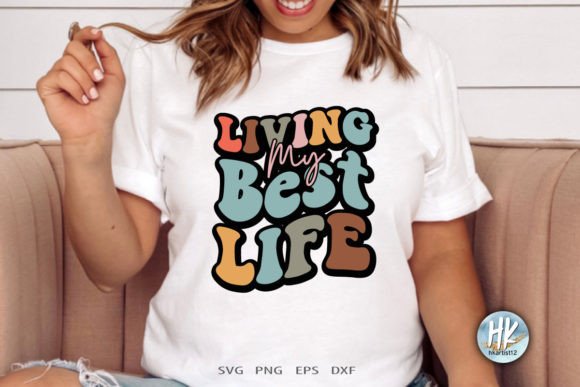
Living My Best Life Retro: A Designer's Real-World Review
When I first opened the file for Living My Best Life Retro, my immediate reaction wasn't about the technical specs or the list of included formats. It was about the vibe. There is a specific energy to retro-inspired typography that can either elevate a handmade product or make it look dated if executed poorly. As someone who has spent years refining embroidery files for boutique brands and custom gifts, I know that the difference between a generic design and a bestseller often comes down to how well the design translates from a digital screen to a physical stitch.
This Living My Best Life Retro design feels like a breath of fresh air for anyone looking to inject some nostalgia into their craft business. The layout is bold, the curves are inviting, and the overall aesthetic screams "vintage cool." But does it hold up under the needle? Can it survive the rigors of daily wear on a tote bag or a sweatshirt? Let's dive into a practical evaluation based on real-world application scenarios.
The First Impression: Mood and Visual Personality
The moment you lay out the Living My Best Life Retro design on your hoop, you realize this isn't just text; it's a statement. The retro theme suggests warmth, optimism, and a touch of mid-century charm. For an embroidery designer, this is crucial because the mood of the design dictates the type of fabric and thread colors you should choose. This piece naturally belongs in projects that celebrate personal style, lifestyle branding, or heartfelt gifting.
The visual personality is confident without being aggressive. In the world of machine embroidery design, balance is everything. If a design is too dense, it creates a stiff patch that doesn't drape well on apparel. If it's too sparse, it looks unfinished. Living My Best Life Retro strikes a sweet spot where the lettering has enough presence to be read from a distance but retains enough elegance to fit on smaller items like baby onesies or aprons. It feels like a design that customers will actually want to wear or display, rather than something they will hide in the back of a closet.
Real-World Application: From Digital File to Finished Product
Let's imagine a scenario. You are preparing inventory for a holiday market or restocking your Etsy shop. You have a batch of canvas tote bags and heather gray sweatshirts ready for customization. You decide to use Living My Best Life Retro as the centerpiece for these items. How does it perform?
On a sturdy canvas tote bag, this design shines. The stability of the fabric supports the weight of the stitches, allowing the fill stitch areas to lay flat and smooth. The retro curves create a nice flow across the front of the bag, making it a perfect accessory for coffee runs or grocery trips. Customers love seeing designs that reflect their current mindset, and "Living My Best Life" is a phrase that resonates universally. It transforms a simple utility item into a personalized gift that feels special.
Moving to apparel, specifically a crewneck sweatshirt, the dynamic changes slightly. The soft texture of fleece requires careful handling of stitch density. If the design is too heavy, the sweatshirt will feel like it's wearing the embroidery rather than the other way around. However, when digitized correctly, Living My Best Life Retro sits comfortably on the chest or back of a hoodie. It adds a layer of professionalism to your custom apparel line, signaling to buyers that you care about quality and detail.
I also envision this design working beautifully on kitchen towels and pillow covers. The running stitch details (if present) would catch the light nicely on cotton blends, adding a tactile element that machine prints simply cannot replicate. For a small shop owner, this versatility means you can create a cohesive collection using one primary design asset, saving time while maximizing your product range.
Where Caution is Required: Limitations and Challenges
No design is perfect for every situation, and being an honest reviewer means acknowledging where Living My Best Life Retro might struggle. While it excels on stable fabrics, there are specific contexts where you need to proceed with caution.
Small Hoop Sizes: If you are working on very small items like hat brims or tiny baby booties, the curvature of the letters might become distorted if the design isn't perfectly adapted for the curve. Always test the hoop size relative to the garment shape before committing to a large production run.
Textured and Stretchy Fabrics: Working with thin knits or highly textured materials like bouclé can be tricky. The design might get lost in the fabric weave, or the tension could cause puckering. On stretchy fabrics, the stabilizer choice becomes critical. Without a high-quality cutaway stabilizer, the retro curves might warp after washing, ruining the crisp look of the finished product.
Detailed Corners and Tiny Lettering: While the main message is clear, any fine details within the retro flourishes need to be scrutinized. On dark fabrics, light threads might not pop enough if the stitch count is low. Conversely, on light fabrics, dark threads might bleed if the density is too high. Always inspect the small details in your digitizing software to ensure nothing gets lost in translation during the stitching process.
Impact on Brand Value and Customer Trust
In the competitive world of Etsy sellers and craft businesses, the quality of your embroidery directly influences customer trust. A sloppy stitch job can ruin the perception of an entire brand, no matter how good the product is. Living My Best Life Retro, when executed with precision, elevates the perceived value of your handmade product.
When a customer receives a gift or a purchase that features clean lines, consistent thread colors, and a design that sits perfectly flat, they associate that quality with your brand. It shows attention to detail. This design helps build a narrative around your shop—one that values creativity, nostalgia, and quality craftsmanship. It turns a simple transaction into a memorable experience, encouraging repeat purchases and positive reviews.
Practical Notes for the Embroidery Designer
Before you hit the "start" button on your machine, here are a few essential steps to ensure success with this design:
- Test on Scrap Fabric: Never start with your final product. Run a test on scrap material to check for tension issues, color clashes, and potential distortion.
- Check Thread Contrast: Ensure your chosen thread colors provide enough contrast against the background fabric. A retro design often relies on bold contrasts to maintain its vintage appeal.
- Review Stitch Density: Look at the stitch density in your digitizing software. If it seems too heavy for the intended fabric, consider reducing the fill density to prevent bulkiness.
- Confirm Stabilizer Usage: Use the appropriate stabilizer for your fabric type. For stretchy garments, a cutaway stabilizer is usually non-negotiable to maintain the integrity of the embroidery project.
- Inspect Small Details: Zoom in on the corners and intersections of the letters. Are there any loose ends or potential snag points that could fray over time?
- Verify Licensing: Before selling finished items featuring Living My Best Life Retro, double-check the license terms provided with the download. Ensure you have the right to sell commercial products made from this digital embroidery file.
Ultimately, Living My Best Life Retro is more than just a graphic; it is a tool for creative entrepreneurs to express themselves and connect with their audience. By understanding its strengths and respecting its limitations, you can turn this design into a standout piece in your catalog. Whether you are creating a unique personalized gift for a friend or building a robust line of small shop products, this design offers the flexibility and charm needed to succeed in today's market.
Take the time to experiment, test, and refine. The result will be a finished product that not only looks great but stands the test of time and frequent washing. That is the hallmark of true professional work.